
Starr County Sex Offender Checks
Start a Starr County sex offender lookup with the Texas Public Sex Offender Registry. The Texas Department of Public Safety manages that official statewide source. Use a name search when the person is known, or use the geographic controls for an address, city, county, or ZIP. Search more than one version of a name when an alias or spelling difference is plausible. A place-based search should also account for the fact that city limits, mailing addresses, and ZIP boundaries do not always match.
Read each possible match instead of relying on the result list. Compare the image, physical details, aliases, qualifying offense, registration status, verification date, and registering authority. The date matters because an address is time-sensitive. No Starr County result is not proof that no relevant record exists. A person may be registered elsewhere, listed under another spelling, outside the public adult data, or not subject to a public registration duty.
The official DPS registry search screen shows the best first stop for Texas records.
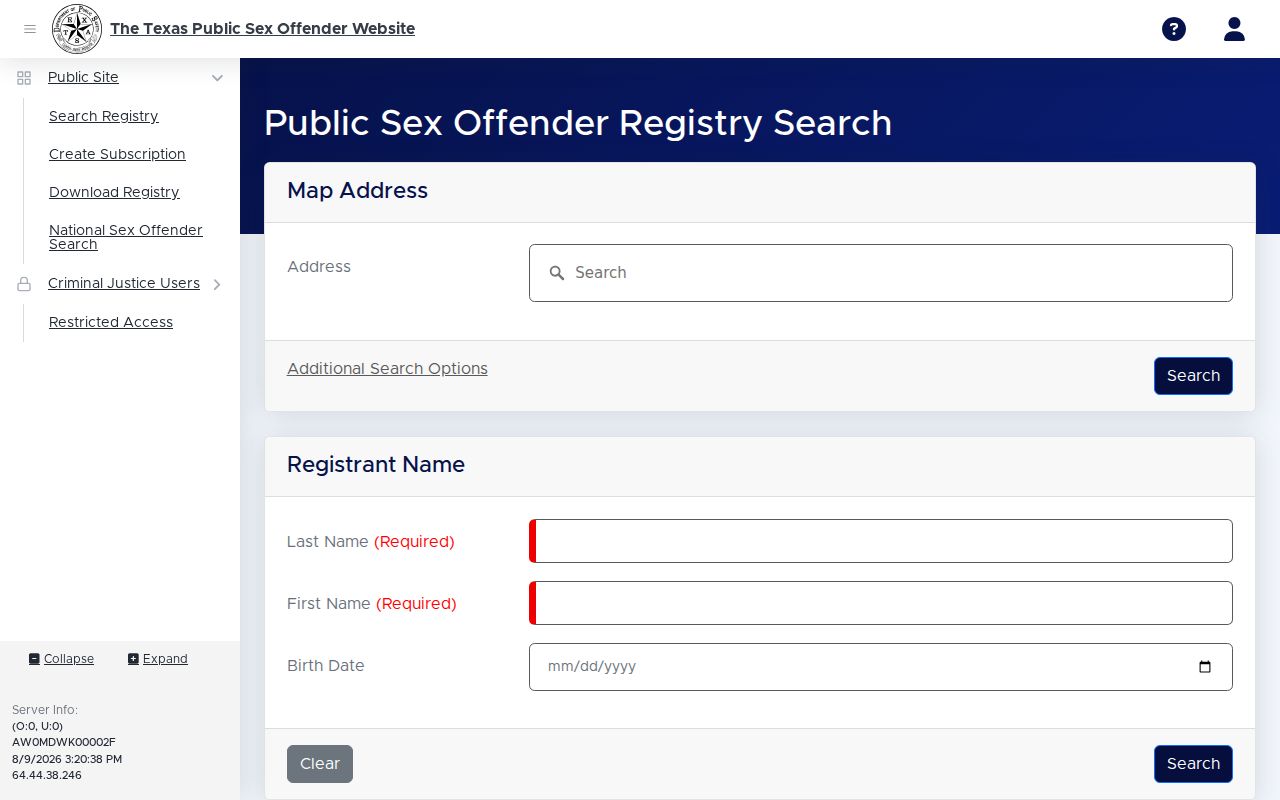
Its statewide controls let a Starr County reader move between identity-based and place-based checks without using an unofficial people-search service.
Texas Public Sex Offender Registry Searches
The DPS registry publishes information that Texas law makes public. It offers both identity and geographic paths, which serve different needs. A name search is strongest when the reader has enough detail to distinguish people with similar names. Geographic mode is more useful for awareness around a Starr County address, city, or ZIP, but a narrow boundary can omit a nearby result. Keep the search broad at first, then narrow it with care.
- Open the official DPS registry and read its conditions of use before entering a search.
- Choose name mode for a known identity, or geographic mode for a Starr County place check.
- Review the result list carefully, using aliases and physical details to avoid a mistaken match.
- Open the full profile and record the verification date, authority, status, and offense details.
| Field Label | Type | Required | Notes |
|---|---|---|---|
| Last and first name | Text | Mode dependent | Use identity mode and try documented aliases. |
| Address | Geographic text | Mode dependent | Enter a known street address for a place-based check. |
| City, county, or ZIP | Geographic input | Mode dependent | Use Starr County and nearby place variants cautiously. |
| Radius or distance | Geographic filter | No | Use when the live interface presents this control. |
| Search or Clear | Action control | Yes | Submit the chosen mode or reset all entries. |
Save the exact inputs and date used if the result may need later confirmation. Registry content changes as authorities verify or update records. A screen captured today should not be treated as permanent proof of a person's later address or status.
Starr County Registry Border Searches
Starr County sits along the Rio Grande and the U.S. 83 corridor, where daily travel can cross city, county, and state jurisdictions. The Texas DPS registry remains the controlling source for a Texas profile. The National Sex Offender Public Website, operated by the U.S. Department of Justice, adds a federated search across participating jurisdictions. It is a supplement, not a replacement for the state record.
| Source | Best Use | Important Limit |
|---|---|---|
| Texas DPS registry | Texas profile and registering-authority detail | Does not stand in for every other jurisdiction |
| NSOPW | Cross-state and multi-jurisdiction name or place search | Results depend on participating public registries |
The NSOPW public search interface is especially useful when a Starr County search raises an interstate question.
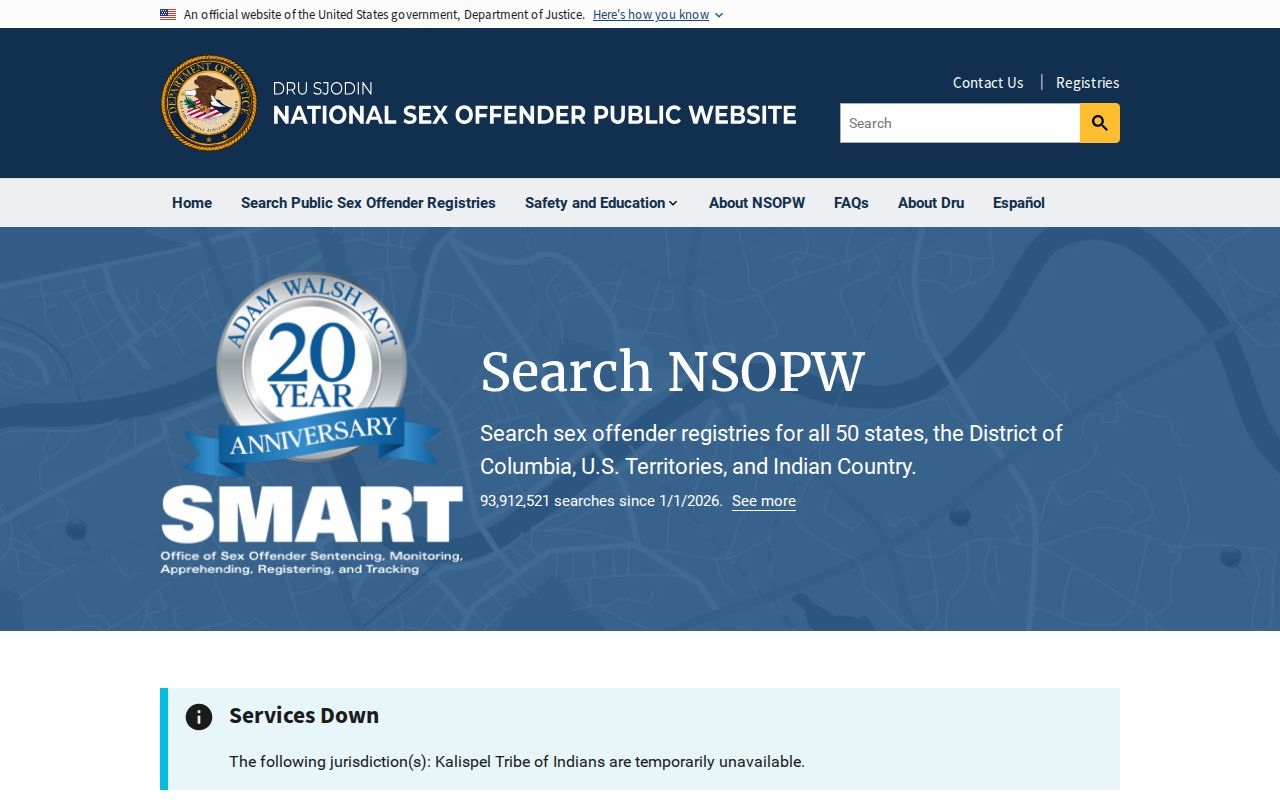
Run comparable name and location inputs in both systems, then rely on the source registry's profile for the official details behind a federated result.
Registry Profiles: What They Show
A public Starr County registry profile combines identity, registration, and offense fields that Texas law authorizes for release. Those fields help a reader distinguish records and understand who last verified the entry. They do not provide a complete criminal history, every court filing, private supervision notes, or a forecast of future conduct. Read the record as a registry entry with a specific legal purpose.
| Name and aliases | Reported names and known aliases used to help distinguish an identity. |
|---|---|
| Photo and description | Image plus legally public sex, race, age or birth detail, height, weight, hair, and eye information. |
| Residence detail | Registered address or another geographic residence description permitted for release. |
| Offense information | Qualifying offense, conviction or adjudication date, and victim age category where public. |
| Registration details | Status, risk or duty information, verification date, and responsible registration authority. |
| Other identifiers | Authorized entries may include vehicles, school or work information, or identifying marks. |
Match several fields before deciding that a result concerns the intended person. Similar names are not enough. If a Starr County address seems old, note the displayed verification date and contact the listed authority. Do not republish a profile merely to ask others to identify it.
Reading Starr County Registry Dates
The verification date tells when the registration authority last confirmed information under the applicable schedule. It is not a promise that every visible fact changed that day. Nor does an older date alone prove noncompliance. Texas verification frequency may be annual, every 90 days, or otherwise set by the offense and registration status.
When a Starr County registry address appears stale, keep the profile URL or identifying record details and contact the authority named on the page. State whether the question concerns the address, status, or verification date. Let the agency review the official record. Do not visit the address, confront anyone, or circulate an accusation. If there is an immediate threat, use the appropriate emergency channel rather than a registry inquiry.
Note: Registry addresses are time-sensitive records, so the profile's verification date belongs in any careful Starr County review.
Registration Levels and Duties in Texas
Texas does not assign every public registrant a simple Tier I, II, or III label that reliably states duration. The controlling rule is Code of Criminal Procedure Chapter 62, especially Article 62.101. Duration turns on the reportable offense and the person's legal circumstances. Verification frequency is also offense and status dependent, so the current profile and statute should be read together.
| Level / Tier | Duration | Verification Frequency |
|---|---|---|
| Many adult reportable offenses | Lifetime duty when Article 62.101 requires it | Annual, every 90 days, or another required interval |
| Other adult reportable offenses | Through the tenth anniversary after release from confinement or discharge from supervision, whichever is later | Set by the governing offense and status rules |
| Juvenile or out-of-state matters | Separate statutory analysis applies | Depends on the applicable Texas duty and order |
The table is a map of the statute, not an individualized ruling. Release from confinement and discharge from supervision are different events. The later event can control the ten-year period. Juvenile registration information may also be restricted, while out-of-state duties require their own analysis. Confirm a particular duty through the listed authority and the actual court or registration record.
The official Texas Chapter 62 text provides the source for registration content, authority, duration, and public-use limits.
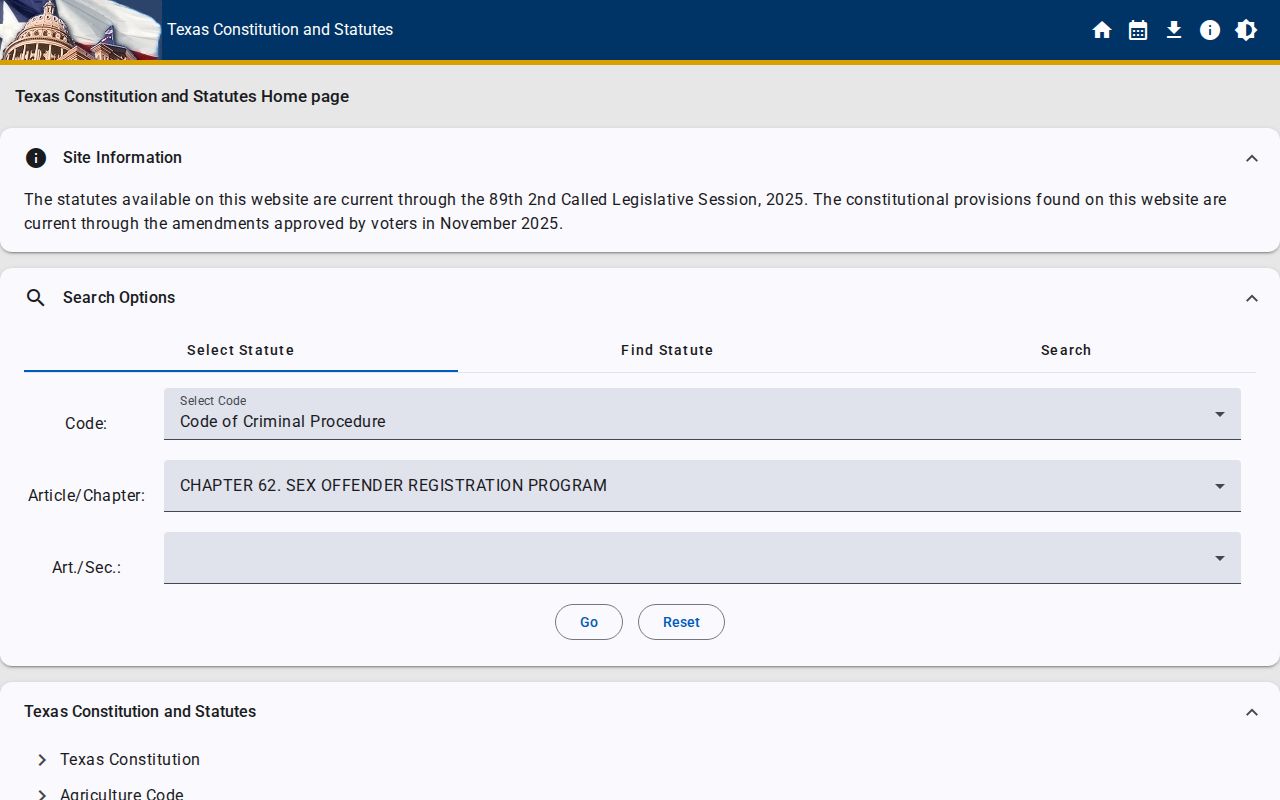
Reading the statute prevents a misleading shortcut based on a tier label that Texas does not use as a universal public duration rule.
Starr County Registry Geography Gaps
A geographic search is only as broad as its inputs. Starr County covers Rio Grande City, Roma, La Grulla, and substantial unincorporated land along the Rio Grande and U.S. 83. A city-only query can miss an address just outside municipal limits. A ZIP-only query may reflect postal geography rather than the line that determines which authority registers the residence.
Begin with Starr County, then compare city, ZIP, street, and radius options when available. For a known person, add a name search with alias variants. For a place, repeat the check with a nearby city or wider distance when boundaries are uncertain. Review the authority and verification fields on each plausible result. This reduces false confidence from an empty screen.
Public Starr County Registry Data
The public registry does not reveal every record that government agencies may hold. Texas law authorizes publication of defined registration information, but juvenile material and other protected records may remain restricted. An empty Starr County search can therefore support only a limited statement about public results. It cannot prove that no sealed, restricted, juvenile, or nonqualifying record exists.
That distinction protects accuracy and privacy. Use adult public fields for their safety purpose. Do not infer a hidden juvenile history or combine a profile with protected identifiers. A public screen does not replace the court order, official registration file, or advice from a qualified Texas lawyer.
Using Registry Information Lawfully
Public registry data exists for safety and community awareness. A Starr County family can use it to understand nearby public records, check a route or address, and discuss sensible safety plans. The record is not a score of future risk. It should not be turned into a private blacklist or stripped from its date, status, and authority fields.
DPS and NSOPW warnings bar threats, intimidation, harassment, and criminal misuse. Texas Chapter 62 also governs release and use of registration information. Contact the registration authority listed on the profile when clarification is needed. Report suspected noncompliance through law enforcement, not through confrontation or social-media exposure.
Misuse is a crime: Texas Code of Criminal Procedure Article 62.005 prohibits using released registry information to injure, harass, or commit a crime against a registrant or that person's family.
Keep the response proportionate to the facts shown. If a profile appears wrong, preserve the record details and ask the named authority to verify them. If no public record appears, remember the limits of spelling, geography, public juvenile information, and registration eligibility. The safest conclusion is narrow: the official search did or did not return a public result for the inputs and date used.