
Criminal Court Cases in Starr County
Starr County criminal court cases do not all belong to one clerk or one bench. Felony filings go to the 229th or 381st District Court. The Starr County Court at Law and county clerk channel handle qualifying misdemeanors. Justice courts and city municipal courts keep fine-only and other limited matters within their own jurisdiction. A useful court case lookup therefore begins with the charge level, filing court, and cause number rather than a broad name search alone.
The Starr County Courthouse at 401 N. Britton Avenue is the local records hub. Room 201 is the county clerk location for county-level case requests. The 229th District Court is in Room 303, and the 381st District Court is in Room 401. Court coordinators manage settings and courtroom information, but the clerk maintains the filed pleadings, docket, judgment, and copies. That distinction matters when a calendar page shows a hearing but not the signed result.
The official Starr County district court directory shows the felony-court route. Its layout is preserved in the assigned court-record image below.
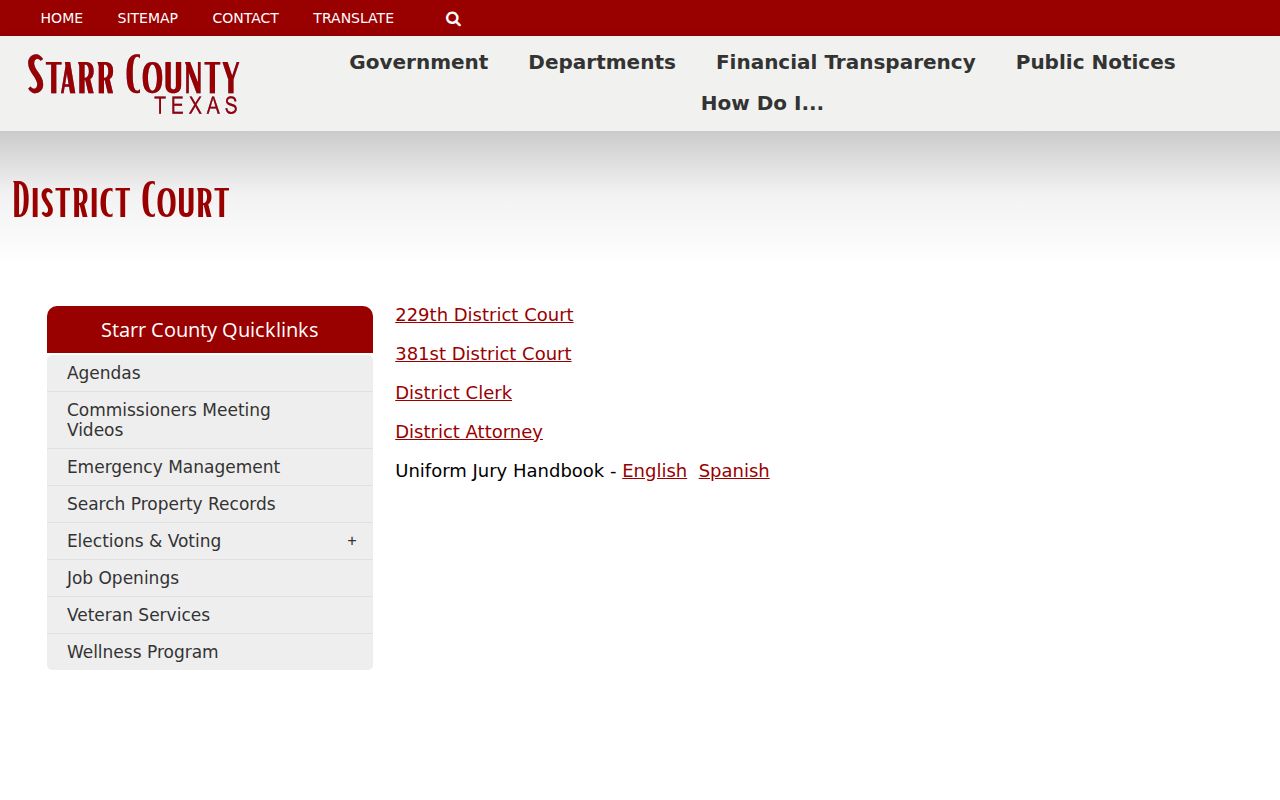
The directory helps identify the court office before a Starr County case-record call or courthouse visit.
Starr County District Court Files
The two felony courts share the courthouse but keep separate dockets. A district-court label without a court number can leave a requester at the wrong office. Use the cause number, filing year, full recorded name, and court number when available. The 381st criminal coordinator is reached through the courthouse main line at extension 8626, while the court's main room contact is extension 8664. The 229th page uses the same main courthouse number and identifies an administrator/interpreter at extension 8208.
The 229th District Court page documents Room 303, court calendars, and local courtroom resources.
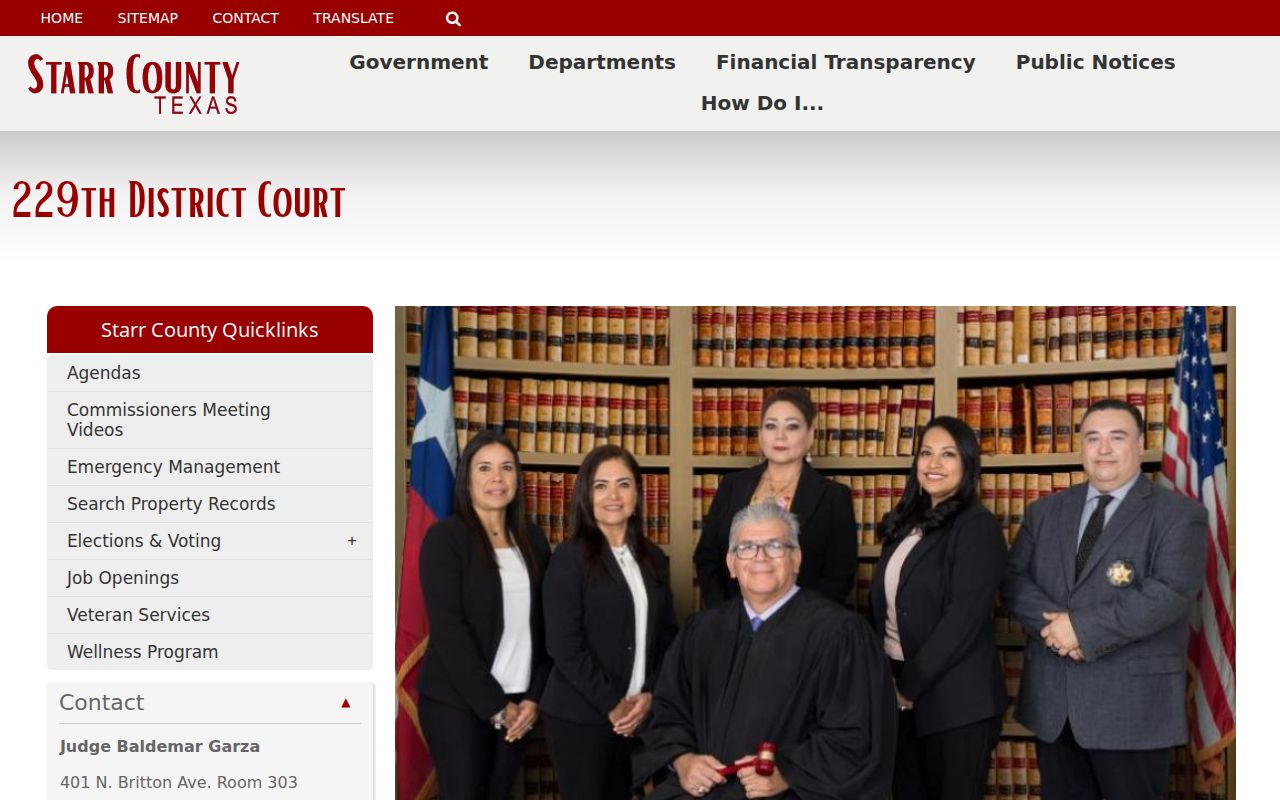
Those calendar and protocol links are aids to a case search, not substitutes for a clerk-certified docket or judgment.
The 381st District Court page supplies the matching Starr County felony-court contact.
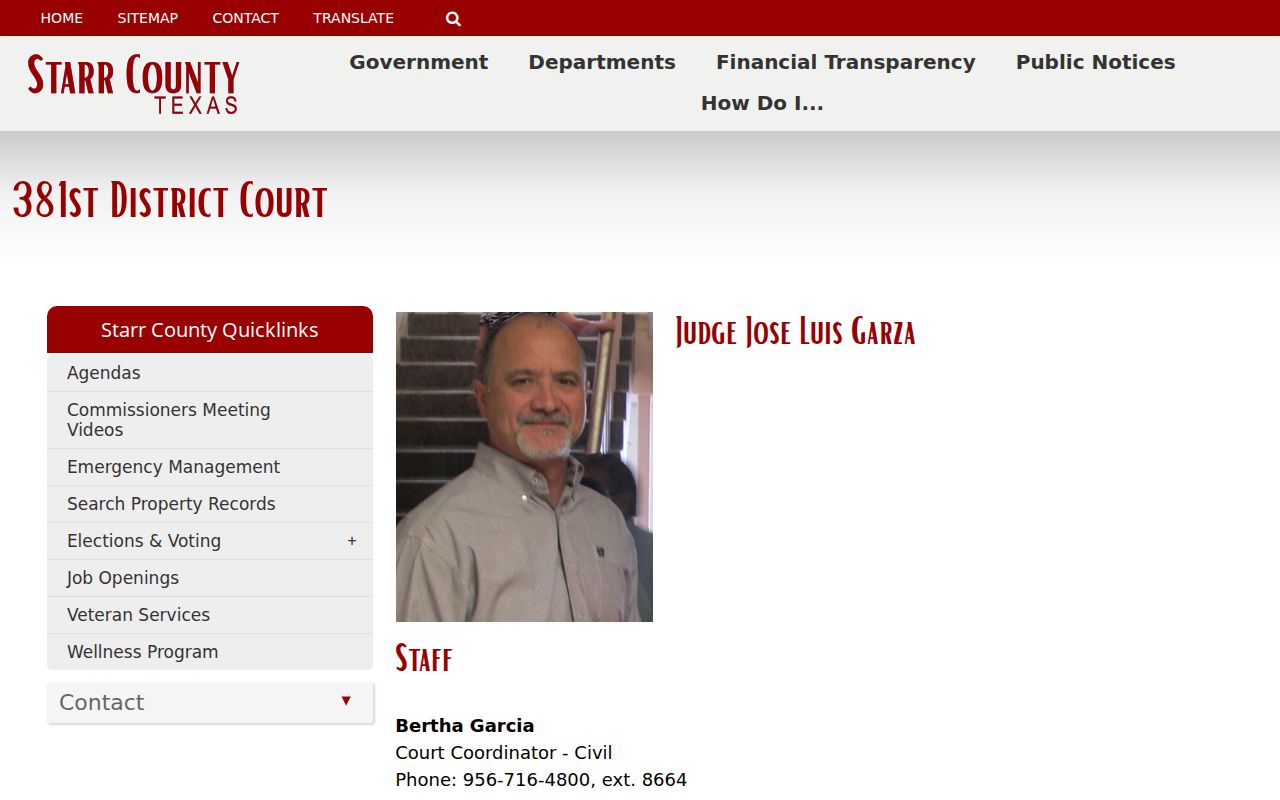
Checking both court identities prevents a blank response from being mistaken for proof that no felony case exists.
Starr County Case Record Searches
Remote discovery can start with re:SearchTX, but local confirmation remains part of the process. Starr County participation, the public document set, and older-file coverage can vary. A court calendar can add a setting date or cause number. The proper clerk then confirms whether the file is electronic, paper, archived, or available for inspection and copying.
- Identify whether the matter is a felony, county misdemeanor, justice-court matter, or municipal citation.
- Search re:SearchTX by party name or cause number, then narrow to Starr County, the likely court, criminal category, or filing range.
- Check the matching official court calendar for the cause number, court, setting type, and custody notation.
- Call the relevant clerk and give the cause number, full recorded name, and filing year. Ask whether the result is only a calendar entry or a complete file.
- Submit the criminal case request form and state whether a plain copy, certified judgment, or in-person inspection is needed. Confirm current fees first.
These are the documented fields used for statewide electronic discovery. No single field is guaranteed to return every Starr County criminal case.
| Field | Type | Required | Use |
|---|---|---|---|
| Party or name | Text | No | Try exact and known recorded variants |
| Case number | Text | No | Best unique court-file locator |
| County and court | Filter | No | Select Starr and the likely trial court |
| Filing-date range | Date | No | Narrows common-name results |
| Case category | Filter | No | Limit results to criminal matters |
Missing Starr County Court Documents
A blank re:SearchTX result does not establish that no Starr County case was filed. Coverage depends on clerk integration, case type, public-access rules, and the state of the underlying file. A spelling difference, changed cause number, restricted matter, or older paper record can also break a remote search. Save the date, spelling, filters, and any result identifier so the clerk can reproduce the inquiry.
The official re:SearchTX platform is the statewide electronic discovery channel for participating trial-court records.
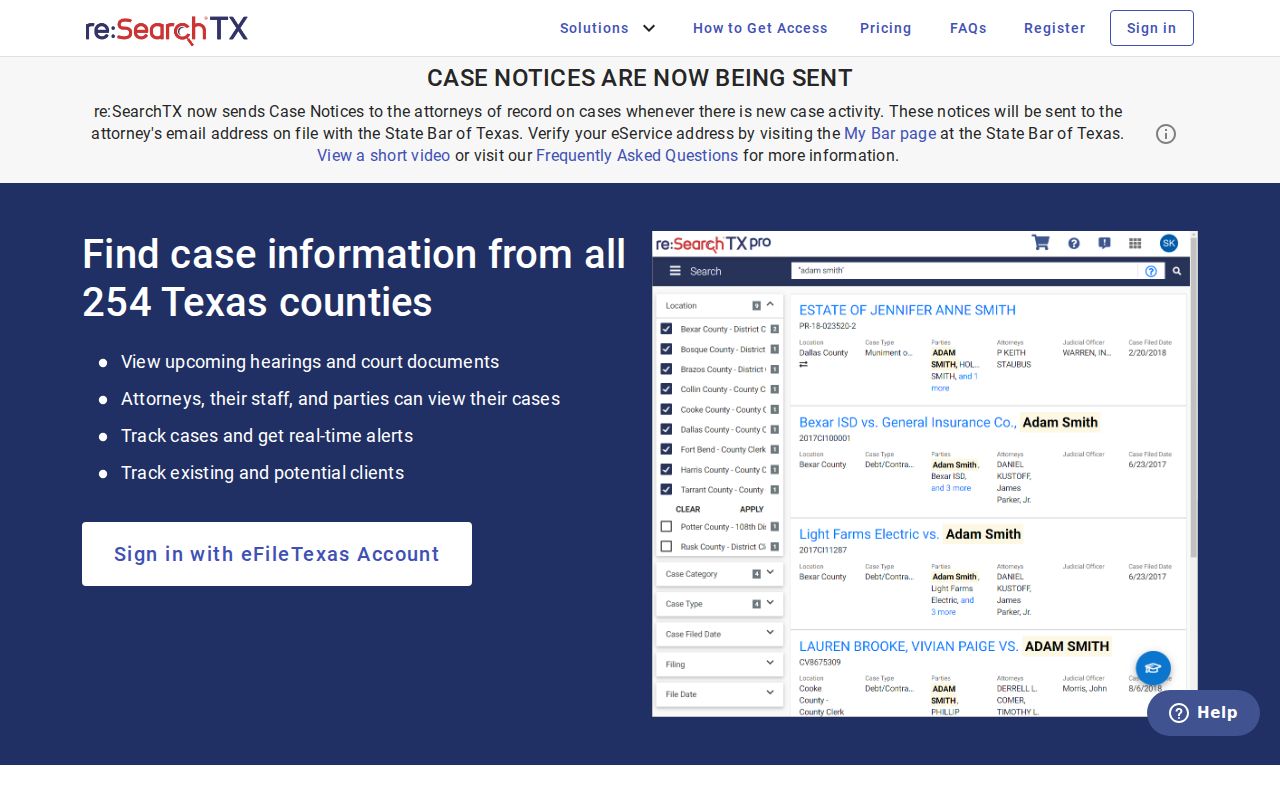
The interface can point toward a file, but Starr County clerk confirmation controls the local trial-court record and copy route.
For a missing document, contact the correct clerk rather than switching to an unofficial index. Ask whether only docket metadata is public online, whether the document requires a request, and whether the file has moved to archive storage. A municipal or justice matter also will not become a district file just because a district search returned nothing.
What a Criminal Case File Contains
A Starr County criminal case file centers on the filed prosecution, not the jail intake. The cause number connects the charging instrument, docket events, settings, motions, plea papers, judgment, sentence, costs, and any appeal notice. Some items may be restricted or redacted. The signed judgment and charge-level disposition provide stronger outcome evidence than an arrest charge or a calendar setting.
| Case Number and Court | Identifies the Starr County file, filing year, and court that owns it. |
|---|---|
| Charging Document | Shows the complaint, information, or indictment filed against the defendant. |
| Docket Entries | Lists filings, orders, appearances, settings, and status changes in date order. |
| Hearing Dates | Records scheduled proceedings, continuances, and completed settings. |
| Disposition and Judgment | States the charge-level outcome and the court's formal judgment. |
| Sentence and Conditions | Shows punishment, community supervision, costs, and court-ordered terms when public. |
An arrest may lead to a changed charge, dismissal, acquittal, deferred adjudication, or conviction. For the booking side of that record trail, the separate Starr County arrest search explains sheriff, custody, and police-report channels.
Starr County Docket Codes
Official Starr calendars show cause numbers with forms such as a year plus a criminal-series marker, including the documented CR or CRS style. They may also display the charge description, case style, setting type, filing date, case age, allotted time, custody notation, and attorneys. These fields help locate a file. They do not prove a final result.
- Disposed
- The court has recorded an outcome or closure, but the word alone does not say whether the outcome was conviction, dismissal, or acquittal.
- Reactivated
- A case has returned to active docket handling after an earlier inactive or disposed status.
- Motion to revoke
- A request asks the court to address an alleged breach of community-supervision terms. It is not itself a new conviction.
- Setting
- A scheduled court event. The calendar may later change and does not replace the resulting order.
Read the docket in sequence, then request the specific order or judgment tied to the entry. A plea setting may end without a plea, and a trial setting may be reset. Only the filed record answers what occurred.
Criminal Case Stages in Starr County
A Starr County case normally begins after law enforcement documents an arrest or complaint. Magistration addresses warnings, probable cause, counsel, and bond. The prosecutor then decides what charge to file, and felony matters may proceed through a grand jury. Arraignment presents the filed charge and takes a plea. Pretrial work can include discovery, motions, plea talks, and repeated settings before trial or another resolution.
Case flow: Charges Filed › Arraignment › Pretrial › Plea or Trial › Disposition › Sentencing
The court file grows at each stage. An indictment is a formal accusation, not a finding of guilt. A plea agreement requires court action. After judgment, sentence and any community-supervision terms appear in court orders. Appeal notices may extend the record beyond the trial court, while Texas appellate Case Search remains separate from re:SearchTX.
Starr County Court Protocol
The 229th District Court publishes plea protocol, courtroom decorum, current calendars, and appointment-wheel material. These resources are unusually helpful for understanding local docket administration. They are procedural aids, not a broad public case database. The Office of Court Administration also posted Starr County Local Rules for the Court at Law and the 229th and 381st District Courts, plus a 2025 order adopting pretrial supervision implementation for the 229th.
The official Starr County local-rules index is the assigned source for the current rule and order set.
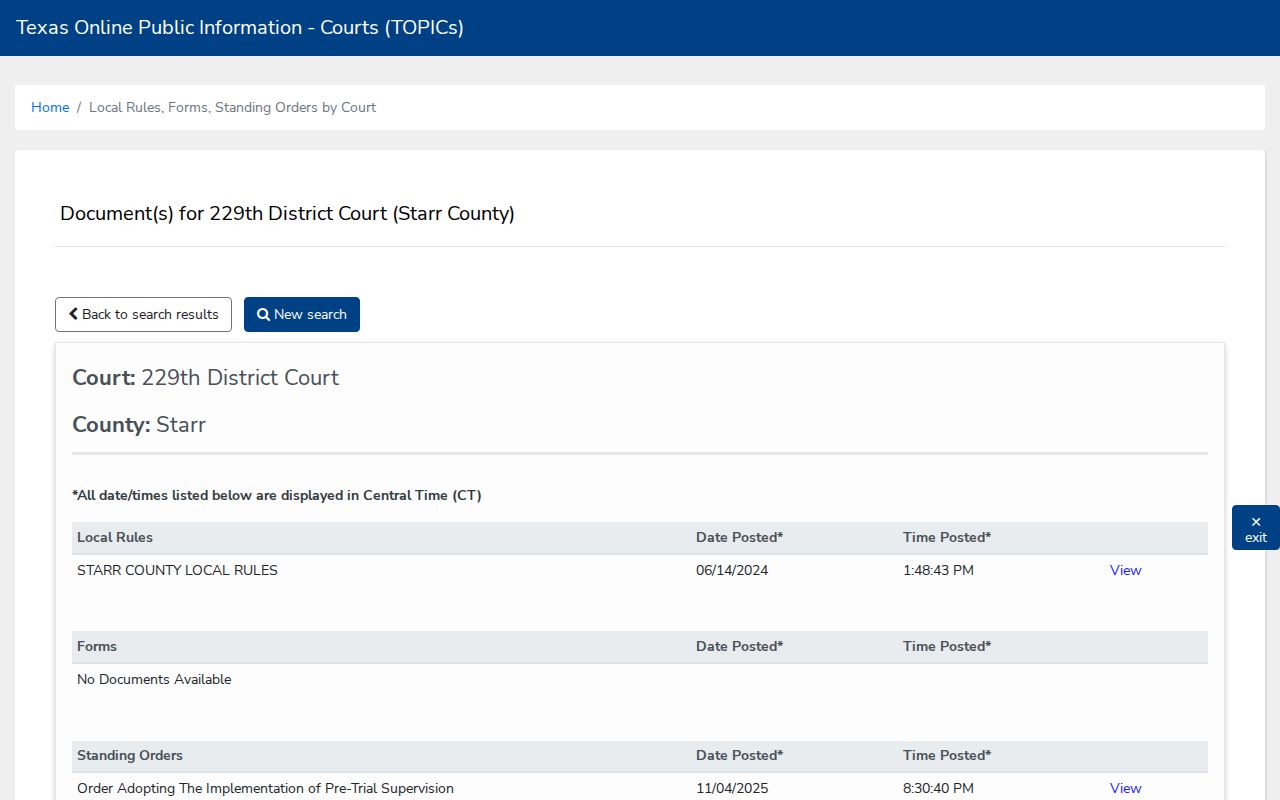
The index can clarify procedure, but it does not show a private party's judgment or replace a court case lookup.
Access Rules for Case Records
Texas court files are controlled through judicial rules and clerk access standards, not solely through the Texas Public Information Act. Public portions of pleadings, dockets, and judgments may be available, while juvenile material, protected victim or minor details, medical data, confidential identifiers, grand-jury matters, sealed files, expunged records, and nondisclosed information can be restricted. An online view may also redact fields that remain managed in the clerk-held source file.
Texas Government Code Chapter 411 separately controls DPS criminal-history dissemination. A DPS name-search entry is not the Starr County court file, and the two should not be treated as interchangeable. When an outcome appears wrong or missing, obtain the signed clerk record first. Then direct a correction to the office that originated the error and, when needed, follow the DPS update process.
Starr County Certified Case Records
The Starr County Clerk page links a Criminal Case Request Form and identifies Room 201 as the county-level request channel.
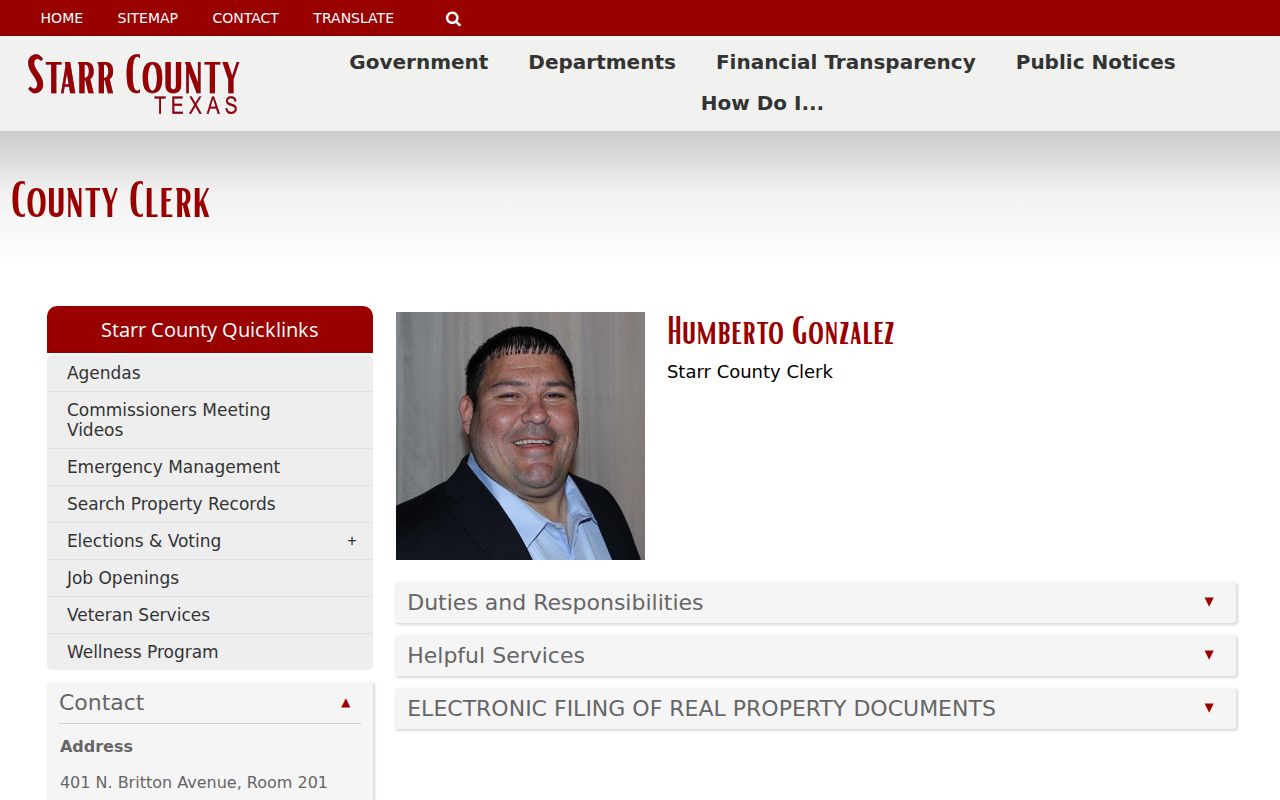
The page provides the official route for misdemeanor-file questions and copy requests, though felony-file custody must still be matched to the proper district clerk channel.
Ask for a certified copy when the legal authenticity of a judgment, dismissal, or docket entry matters. Give the cause number, full recorded name, court, and approximate filing year. State the exact document needed instead of requesting an entire file by default. The county research did not locate a dependable current plain-copy or certification fee, so confirm the amount, accepted payment, delivery method, archive status, and turnaround before ordering.
For a visit, bring identification and the case details, expect courthouse screening, and verify counter access in advance. The county does not publish one universal records-counter schedule. Spanish-language or accessibility needs can be raised with the relevant court coordinator, including the administrator/interpreter contact listed by the 229th District Court.